A small dining room does not need a timid light fitting. In fact, a well-chosen statement piece can make a compact dining area feel considered, intimate and distinctly luxurious. The right small dining room lighting example is not simply a tiny ceiling light centred over a table. It is a scheme that gives the table presence, softens the room’s edges and makes every dinner feel a little more special.
The secret is proportion, not restraint. A petite room can accommodate a sculptural chandelier, a refined cluster pendant or a warm wall-light pairing beautifully, provided the fitting relates to the dining table and leaves enough visual breathing room around it.
A small dining room lighting example with real impact
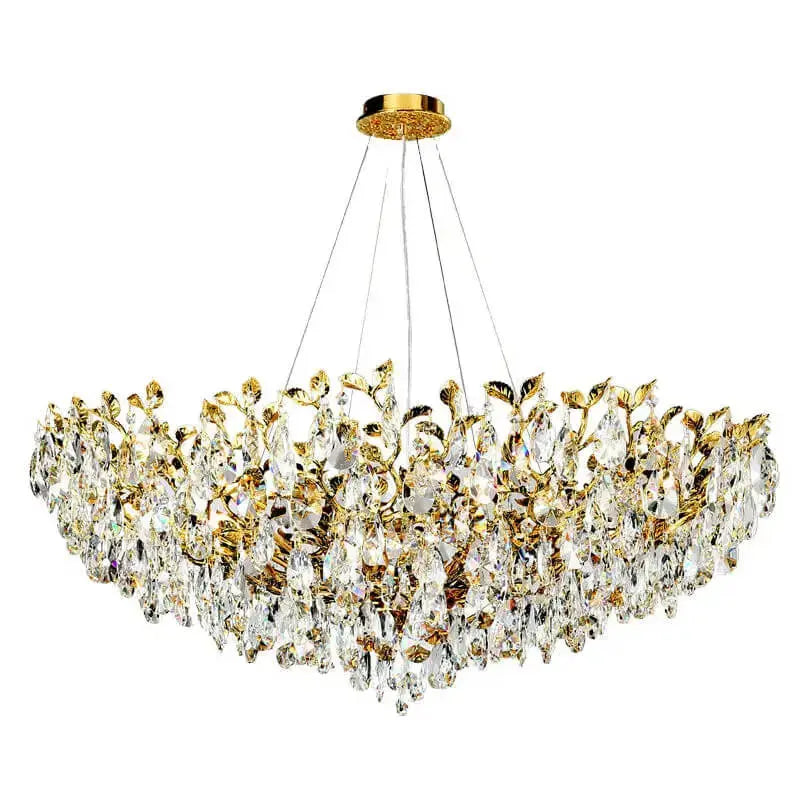
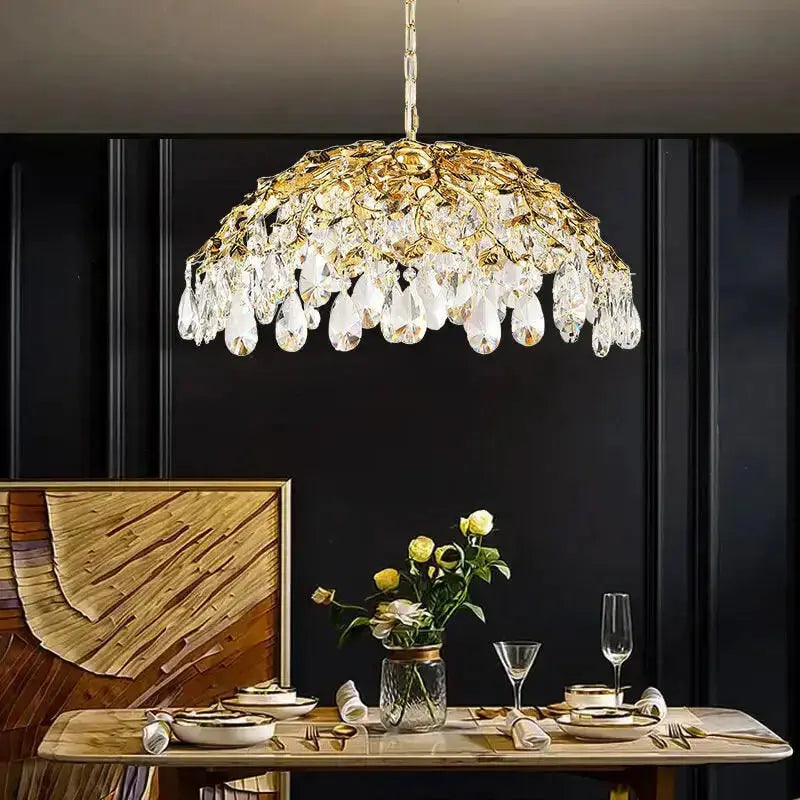
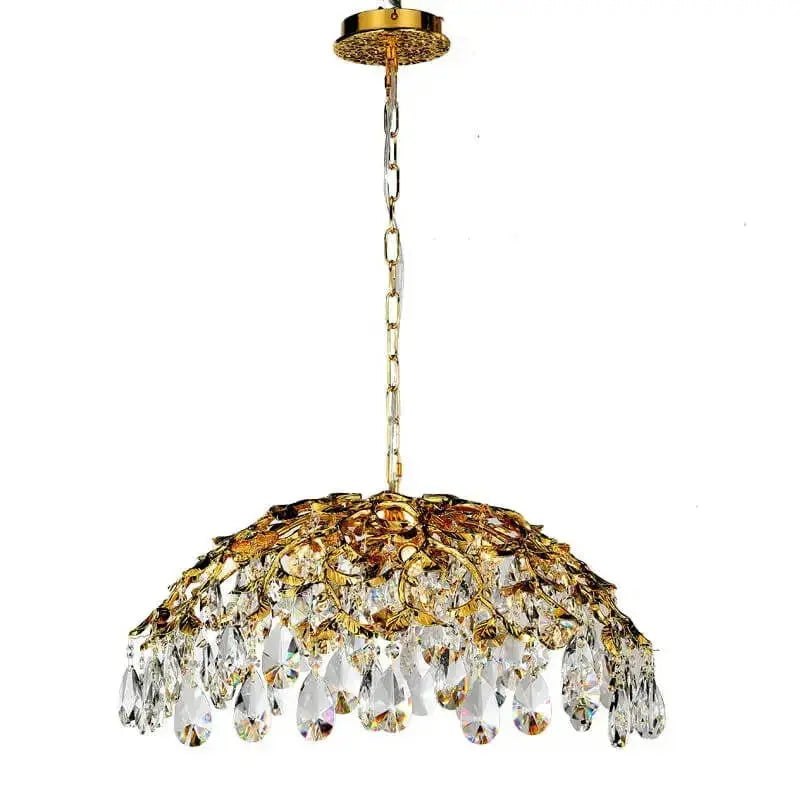
Imagine a dining room measuring roughly 2.7 by 3 metres, with a round table at its centre. Rather than choosing a flat, anonymous flush fitting, hang a 45 to 55 cm chandelier or pendant above the table. A softly tiered glass design, a slim contemporary brass ring, or an alabaster-inspired pendant will create a focal point without crowding the ceiling.
Set the base of the fitting around 75 to 85 cm above the tabletop. At this height, the light feels connected to the furniture rather than floating too high in the room, while sightlines across the table remain comfortable. If the ceiling is low, favour an open-frame chandelier, a shallow semi-flush design or a compact linear pendant. These silhouettes provide decorative presence without lowering the room visually.
Now add a second layer. Two small wall lights on the longer wall, positioned slightly above eye level, can bring warmth to the perimeter and make the room appear wider after dark. Choose frosted glass, fabric shades or indirect lighting if you want a relaxed glow. Crystal or clear glass can be exquisite, but it works best with a dimmer and a carefully chosen bulb so the effect stays elegant rather than glaring.
This is where a compact dining room becomes more than a functional corner. The central fitting defines the occasion; the surrounding light gives the room depth.
Begin with the table, not the room
The dining table is the visual anchor, so it should guide the size and shape of your main fixture. A common mistake is selecting a fitting based only on the floor area. That can lead to a chandelier that disappears above a generous table or a large shade that overwhelms a modest one.
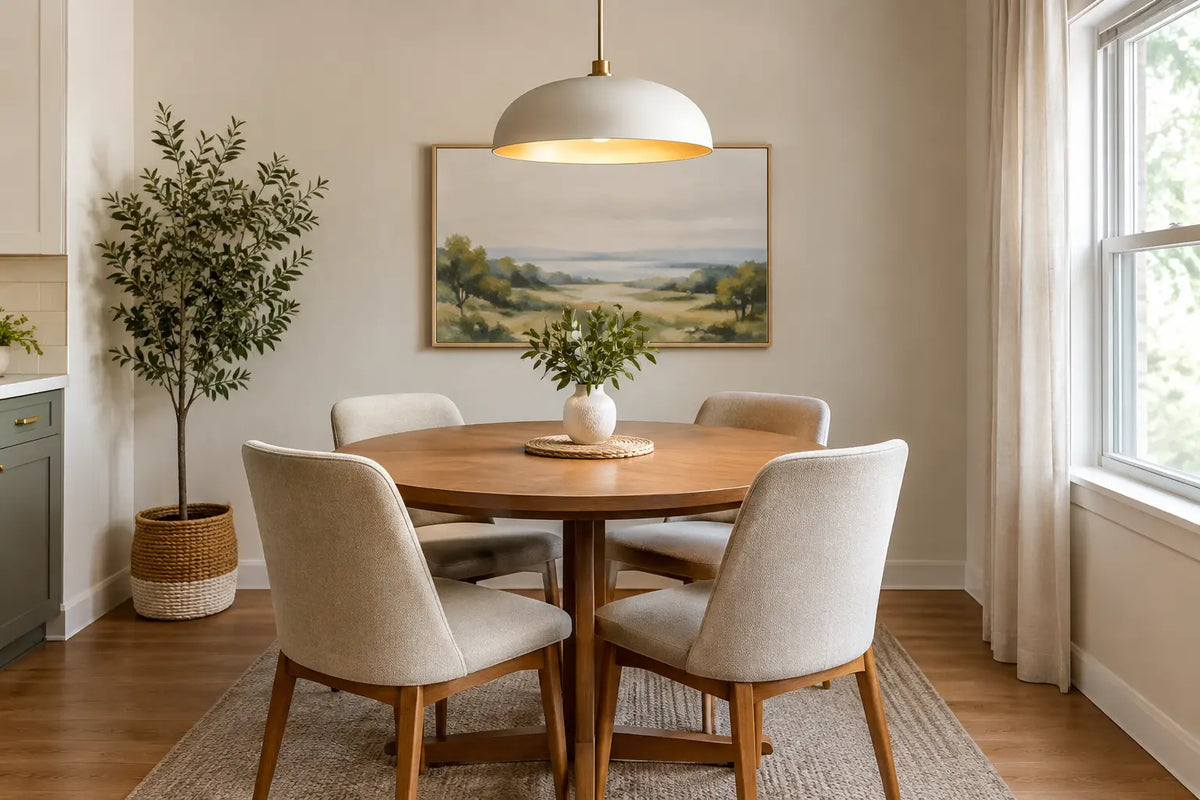
For a round or square table, a single centred pendant or small chandelier usually feels most natural. A fixture with a diameter between one-half and two-thirds of the table width often looks balanced. For example, a 100 cm round dining table may suit a 50 to 65 cm fitting. The aim is a deliberate relationship, not a rigid rule: an airy crystal form can be slightly larger, while an opaque metal shade may need to be more restrained.
For a narrow rectangular table, a linear chandelier or two petite pendants can elongate the setting with purpose. Keep the overall fixture length shorter than the table, leaving a comfortable margin at either end. This protects the composition and prevents the lighting from becoming the only thing the eye notices.
When one statement fitting is enough
In a very compact room, one beautiful central piece can do most of the visual work. This is particularly true where daylight is generous, the walls are calm and the dining table has a clear position. A faceted crystal chandelier can add sparkle to an otherwise minimal scheme, while a modern alabaster-style pendant introduces a softer, more architectural kind of luxury.
The trade-off is practical. One fitting must provide sufficient usable light as well as decorative drama. Look for multiple lamp holders, integrated LED illumination with a warm colour temperature, or a design that directs some light downward. A purely ornamental fitting may look exquisite but leave plates and place settings in shadow.
When to add wall lights or a lamp
Layered light is especially valuable when the dining room is also a passageway, a home-working space or part of an open-plan living area. Wall lights make a small room feel finished because they illuminate the vertical plane, not just the tabletop. They are also flattering at dinner, casting a gentler ambience than an overhead fitting alone.
If wiring wall lights is not practical, a small table lamp on a sideboard offers a similarly inviting effect. Keep the shade low enough that it contributes to the dining atmosphere without competing with the main chandelier. In a room with little spare furniture, a discreet floor lamp tucked into a corner can soften the boundary between dining and living zones.
Choose a style that creates space
The material and silhouette of a fixture can change how large a room feels. Clear glass, crystal and open metalwork allow the eye to travel through the fitting, which makes them excellent choices for smaller spaces. They deliver the allure of a statement chandelier while preserving visual lightness.
A contemporary brass pendant with a milk-glass globe can be equally effective, especially in a period flat or a calm neutral interior. Brass brings warmth, while the rounded form prevents a compact room from feeling too angular. For a more dramatic look, choose smoked glass or dark bronze, but balance it with pale walls, reflective finishes or a lighter dining table.
Opaque oversized shades need more care. They can look striking over a small table, particularly in a modern interior, yet a solid shade blocks sightlines and can make a low ceiling feel closer. If you love the look, select a shallower profile or a perforated, fluted or translucent material that still allows some lightness.
Light quality matters as much as the fitting
A luxury dining room is not defined by brightness alone. It is defined by control. Fit dimmable bulbs or choose a compatible integrated LED fixture so you can shift from clear, practical light for weekday meals to a softer setting for guests.
Warm white light is generally the most welcoming choice for dining. Around 2700K creates a candlelit warmth that flatters timber, brass, skin tones and food. In a dining room that also serves as a workspace, 3000K can provide a slightly cleaner feel, though it may be less intimate in the evening.
Pay attention to glare. Exposed bulbs can be charming, but they should not shine directly into the eyes of anyone seated at the table. Frosted bulbs, shaded lamp holders and diffused glass help create a polished result. With crystal, a dimmer is particularly worthwhile: the reflections stay lively, but the atmosphere remains comfortable.
Placement details that prevent expensive mistakes
Before ordering, mark the fitting’s footprint with painter’s tape on the ceiling, or hold a cardboard circle at the proposed diameter. This simple exercise reveals whether the scale feels intentional from the doorway and from each chair.
Ensure the fixture is centred over the table, even if the table itself is not centred in the room. The dining arrangement should read as its own composed zone. If the table is frequently moved for entertaining, choose a design with an adjustable chain or stem where possible, and plan the ceiling point around its most common position.
Consider doors, tall cabinets and artwork too. A dining chandelier should not obstruct a door swing, compete with a large pendant in the adjacent kitchen or sit so low that it interrupts a view into the next room. In open-plan homes, matching finishes across neighbouring fixtures can create cohesion, but the fittings do not need to be identical. A brass dining chandelier paired with smaller brass-and-glass kitchen pendants often feels far more collected than a matching set.
Finally, do not underestimate the ceiling rose, cord and hardware. In a compact room, every detail is close enough to be noticed. A refined canopy, a neatly adjusted cable and a finish that relates to cabinet handles or curtain poles can make the installation feel tailored.
A small dining room can carry more glamour than its dimensions suggest. Choose a fitting that belongs to the table, layer it with gentle ambient light and give yourself the freedom to dim the room as the evening unfolds. The result is not just better illumination, but a dining space that invites people to linger.