A kitchen island can feel oddly unfinished with a single decorative chandelier overhead, while a tiny pendant may disappear completely in a generous entrance hall. Choosing a pendant or chandelier is not simply a matter of taste. It is a decision about proportion, atmosphere and how you want a room to be experienced the moment someone enters it.
Both fixture types can bring exquisite detail and purposeful illumination to a home. The right choice comes from understanding what each one does best, then matching it to your room’s dimensions, ceiling height and decorative direction.
Pendant or chandelier: start with the room
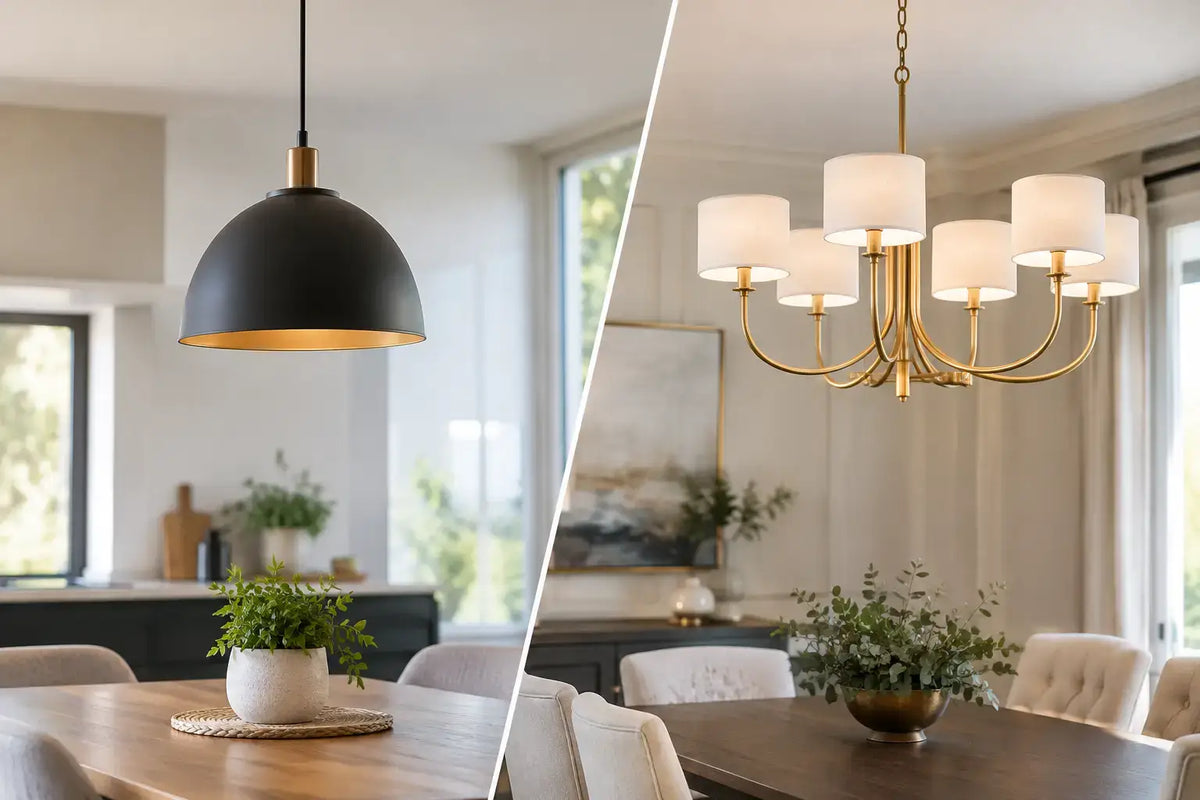
A pendant light is typically one fixture, suspended from the ceiling by a cord, chain or stem. Its focused form makes it especially effective over surfaces where people gather, work or dine. A chandelier has multiple arms, tiers, shades or decorative elements, creating a broader visual presence and often a more ambient spread of light.
Neither is inherently more luxurious. A sculptural alabaster pendant can feel quietly opulent above a dining table, while a streamlined modern chandelier can bring architectural clarity to a contemporary living room. The distinction is less about price or prestige and more about the role the light needs to play.
Choose a pendant when you want to define a zone without filling the entire ceiling plane. Choose a chandelier when the room calls for a focal point with real presence, whether that means sparkling crystal, warm brass, organic glass or a dramatic linear silhouette.
Where pendant lights shine
Pendant lighting is at its most persuasive when a room benefits from precision. Over a kitchen island, a row of pendants creates rhythm while directing useful light towards food preparation, serving and conversation. Over a breakfast table, a single substantial pendant can make everyday meals feel considered rather than casual.
In a bedroom, pendants can also replace bedside lamps, freeing space on a bedside table and giving the scheme a more tailored finish. This works particularly well in compact rooms, provided each pendant is hung thoughtfully and positioned so it does not obstruct movement or reading.
Smaller spaces often welcome pendants because they offer impact without excessive visual weight. A clear-glass design keeps sightlines open, while a metal dome or stone-inspired shade introduces texture and contrast. Do not assume, however, that a pendant must be modest. An oversized sculptural pendant can be a magnificent choice for a dining room or sitting room with a high ceiling.
The trade-off is coverage. One small pendant rarely provides enough general illumination for a large room. It may need support from wall lights, floor lamps, recessed lighting or additional pendants. Decorative lighting looks its best when it is part of a layered plan rather than expected to solve every lighting need alone.
The best pendant placements
Kitchen islands, breakfast bars, dining tables, bedside areas and reading corners are natural homes for pendants. They also suit stair landings and smaller entrances where a chandelier might crowd the architecture. In these settings, the fixture becomes a deliberate punctuation point rather than an all-consuming centrepiece.
When hanging pendants over an island, look at the island’s length and the visual width of each fitting, not just the number of lights. Two generous pendants can look more polished than three undersized ones. For a long island, three fixtures often provide a balanced composition, but spacing should leave enough breathing room at both ends.
When a chandelier is the better choice
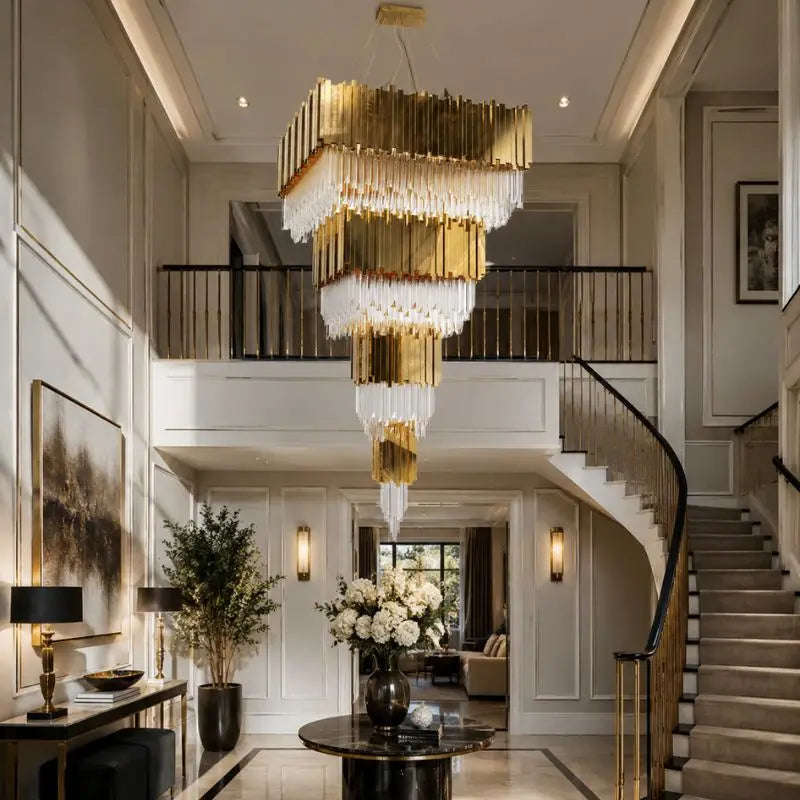
A chandelier earns its place when the room needs drama, scale or a strong decorative anchor. In a foyer, it offers an immediate expression of the home’s character. Above a dining table, it turns the table into an occasion-ready setting. In a living room, it can soften a large ceiling and bring a sense of intimacy to an expansive seating arrangement.
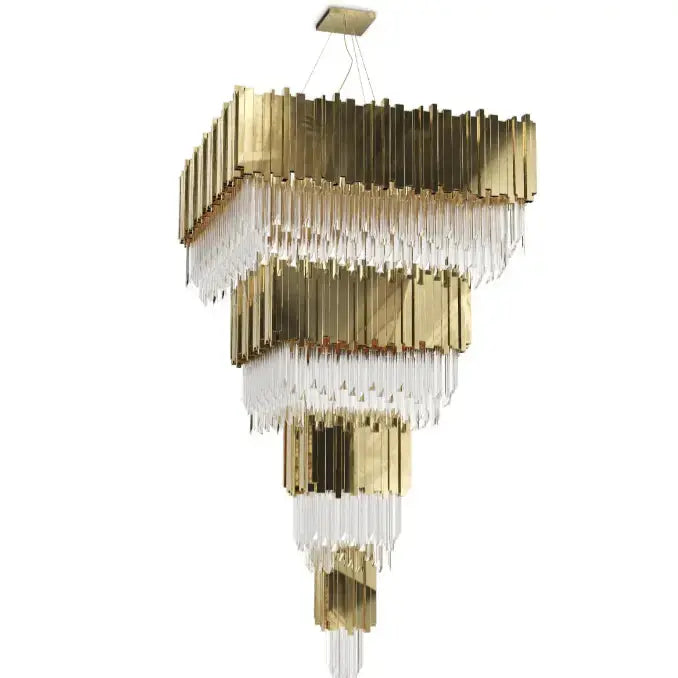
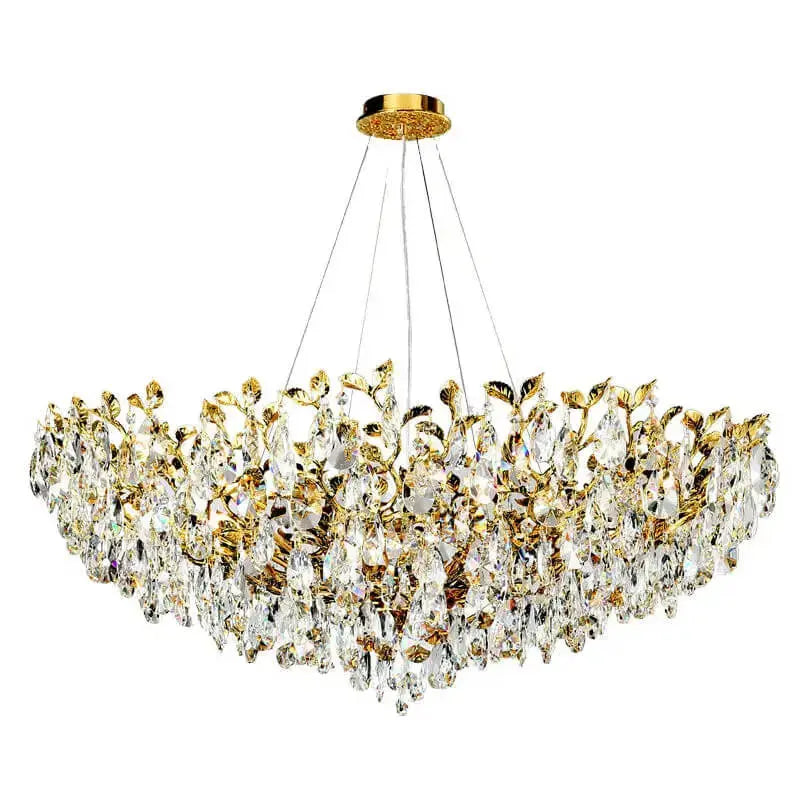
Crystal chandeliers remain a timeless choice for homes that favour glamour and light-catching detail. Their reflective surfaces bring life to daylight and create a captivating glow after dark. For a more contemporary interior, consider a globe chandelier, a minimalist linear arrangement or an organic branch-like form in aged brass or black metal. The chandelier category is much broader than traditional candle arms.
Staircase lighting is another setting where a chandelier can be transformative. A multi-tier piece suspended through a stairwell makes use of vertical space that might otherwise feel empty. Here, the fixture should be viewed from several levels, so its profile matters as much as its light output. A design with visual interest from every angle will feel intentional from the ground floor and the landing alike.
A chandelier does need sufficient room around it. In a low-ceilinged space, a deep fixture can make the ceiling feel lower and interrupt sightlines. If you love the richness of a chandelier but lack height, choose a close-to-ceiling design or a compact semi-flush interpretation that delivers similar decorative character without the drop.
Get scale and hanging height right
Beautiful lighting can still feel wrong when it is out of scale. Before choosing a fixture, measure the room, the ceiling height and any furniture beneath it. A grand chandelier over a narrow dining table can overpower the setting; a delicate pendant in a double-height hallway can look accidental.
For a dining table, leave a comfortable visual margin between the edge of the fixture and the table’s edges. As a general guide, a hanging light should sit around 75 to 90 centimetres above the tabletop, adjusted for unusually high ceilings, tall household members and the fixture’s own depth. You should see the people opposite you without the light interrupting the view.
Over a kitchen island, pendants are often hung slightly higher, usually around 75 to 90 centimetres above the worktop. The goal is practical illumination without placing shades at eye level. If the pendants are large or opaque, err towards a little more height and check the view from surrounding doorways.
For entrance halls and circulation spaces, protect headroom first. Fixtures should not hang into a natural walking route. In stairwells, consider the lowest point of the chandelier in relation to the top landing as well as the floor below. A qualified electrician can advise on safe fitting, weight support and dimmer compatibility before installation.
Match the fixture to your design language
Lighting should relate to the finishes already present in the room, but it does not need to match every metal or material exactly. A warm brass chandelier can bring softness to cool marble, while a black pendant can sharpen a pale, neutral kitchen. The aim is conversation between elements, not a perfectly uniform set.
For traditional interiors, crystal, antique-inspired metalwork and fabric shades add graceful detail. Transitional spaces often benefit from clean silhouettes with refined materials, such as frosted glass, brass and alabaster. In modern homes, look for strong geometry, linear forms and sculptural arrangements that feel like functional art.
Consider the mood you want after sunset, too. Exposed bulbs and clear glass create sparkle but may feel too bright without a dimmer. Opaque shades produce a more controlled pool of light. Alabaster diffuses illumination beautifully, bringing a soft, flattering warmth that suits dining rooms, bedrooms and elegant hallways.
Use layers rather than relying on one fixture
The most inviting rooms rarely depend on one ceiling light. A chandelier can provide ambient presence, but wall lights, table lamps and floor lamps create the lower-level glow that makes a space feel settled. Likewise, pendants over an island work best alongside under-cabinet lighting and softer lighting elsewhere in the kitchen.
Dimmers are particularly valuable with decorative fixtures. They allow a dining-room chandelier to move from bright family supper lighting to a more atmospheric setting for guests. They also make a statement pendant more versatile, especially in open-plan spaces that serve different purposes throughout the day.
At ChandeliersLife, the most considered lighting schemes begin with the room’s architecture, then use a statement fixture to give it personality. Whether your preference is luminous crystal, quiet alabaster or striking contemporary metalwork, select a piece that feels generous enough for its setting and beautiful enough to enjoy every evening.