A ceiling light can either disappear into the room or define it. That is the real decision behind semi flush versus flush mount lighting. Both styles sit close to the ceiling and offer a polished alternative to a hanging pendant or chandelier, but their proportions, visual presence and ideal placement are distinctly different.
For hallways, bedrooms, kitchens and lower-ceilinged living spaces, choosing the right profile makes a remarkable difference. A well-proportioned ceiling fixture brings a considered layer of light to the room while supporting the architecture, furnishings and finish palette around it.
Semi flush versus flush mount: the essential difference
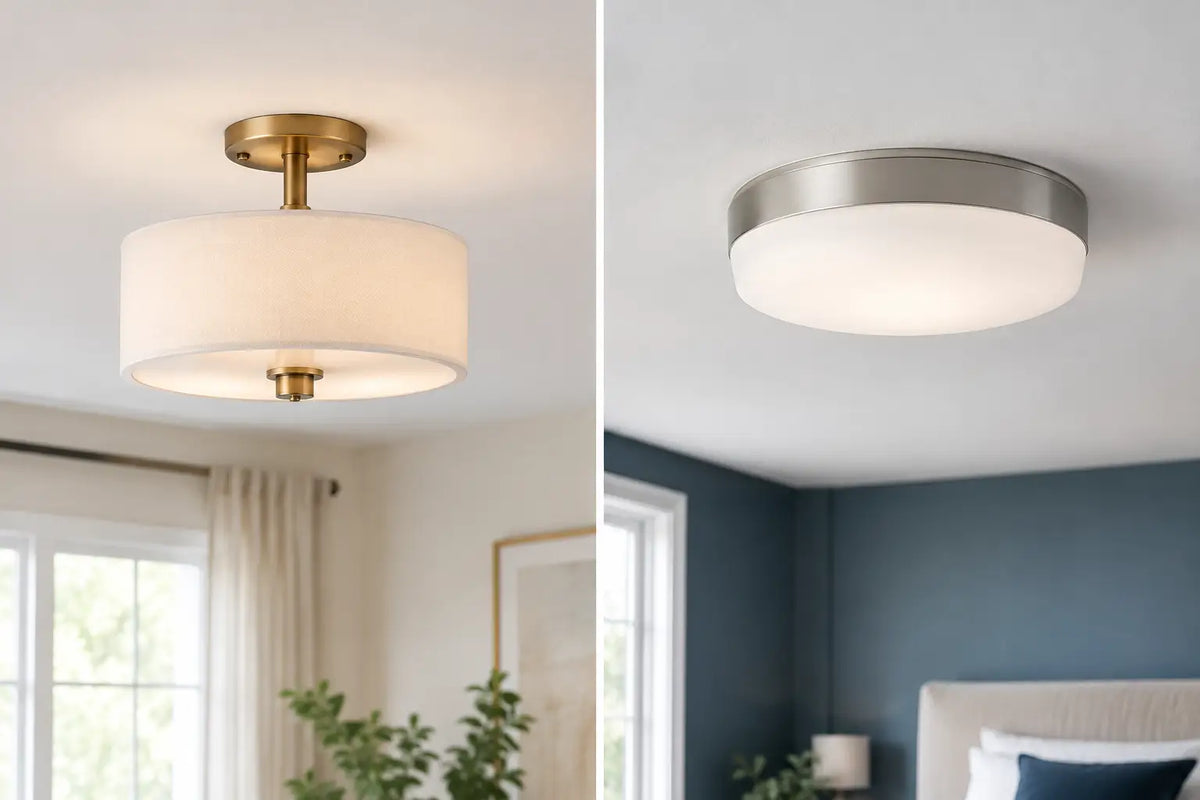
A flush mount light is installed directly against the ceiling, with little to no gap between the fixture and the surface above it. Its compact profile makes it a natural choice where overhead clearance is limited or where a clean, understated finish is preferred.
A semi-flush mount hangs slightly below the ceiling, usually on a short stem or decorative arm. The drop is modest - often between 15 and 30 centimetres - yet enough to give the fitting greater depth, shape and decorative impact. It can also cast light upwards as well as downwards, creating a softer, more layered glow.
Think of a flush mount as the tailored finishing touch: neat, practical and refined. A semi-flush fitting is more like jewellery for the ceiling. It remains suitable for everyday spaces, but introduces silhouette, texture and a stronger design point of view.
Start with ceiling height, not style alone
The first consideration is clearance. In rooms with standard or lower ceilings, a flush mount is often the most comfortable and sensible option. It keeps the room feeling open, avoids visual crowding and prevents taller household members from passing too close to the fixture.
As a general guide, a semi-flush design works beautifully where ceilings are around 2.4 metres or higher, provided the fixture does not project too far. In a busy route such as an entrance hall, corridor or kitchen walkway, preserve generous headroom. A more compact semi-flush model can still work in these areas, but check the finished drop carefully rather than relying on the product photograph alone.
With ceilings closer to 2.7 metres or above, semi-flush lighting becomes especially appealing. The added dimension helps bridge the visual distance between floor and ceiling without the commitment of a full chandelier. It is an elegant solution for rooms that need more presence overhead but do not have the height for a low-hanging statement piece.
There are exceptions. A shallow flush mount with a broad, sculptural shade can make a purposeful design statement, while a petite semi-flush fixture may suit a lower bedroom ceiling if it is positioned away from the main walking area. Scale and placement matter as much as the fixture category.
Where flush mount lighting looks best
Flush mounts excel in spaces where function and visual calm need to work together. A narrow hallway, cloakroom, utility room or smaller kitchen benefits from a fitting that delivers ample illumination without lowering the apparent ceiling height.
They are also a sophisticated option for bedrooms. A fabric, glass or alabaster-inspired flush mount offers gentle ambient light while preserving an uncluttered ceiling line above the bed. In modern interiors, a slim metal design in antique brass, black or chrome can echo hardware and furniture details with quiet confidence.
Flush fixtures should not be treated as purely practical lighting. A fluted glass ceiling light can bring texture to a period-inspired hall; a crystal-accented piece gives a compact dressing area a more glamorous finish; and a contemporary geometric design can anchor a minimalist lounge. The key is to choose a fixture with enough diameter and material presence for the room.
For a room around 3 by 3 metres, a ceiling light roughly 30 to 40 centimetres wide is often a balanced starting point. Larger open-plan rooms may require a wider fitting, multiple flush mounts or supplementary lamps and wall lights to prevent the light from feeling flat.
When a semi-flush mount is the stronger choice
Semi-flush lighting earns its place in rooms where the ceiling needs a little more drama. It is particularly effective in entrance halls, dining spaces, bedrooms and living rooms with moderate ceiling height. The small drop creates shadow, depth and a more decorative focal point than a fully flush fitting can usually achieve.
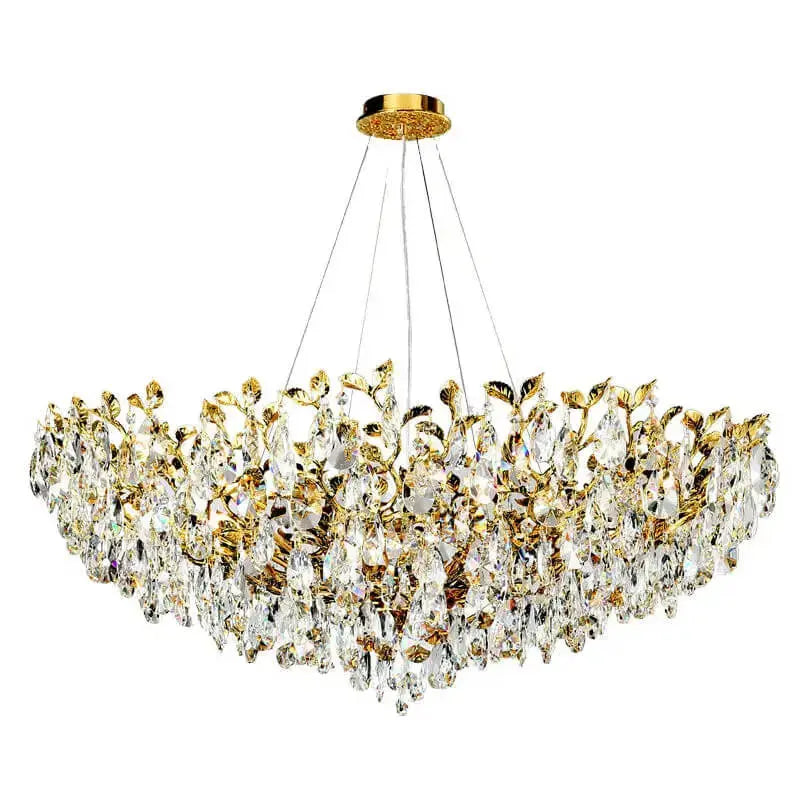
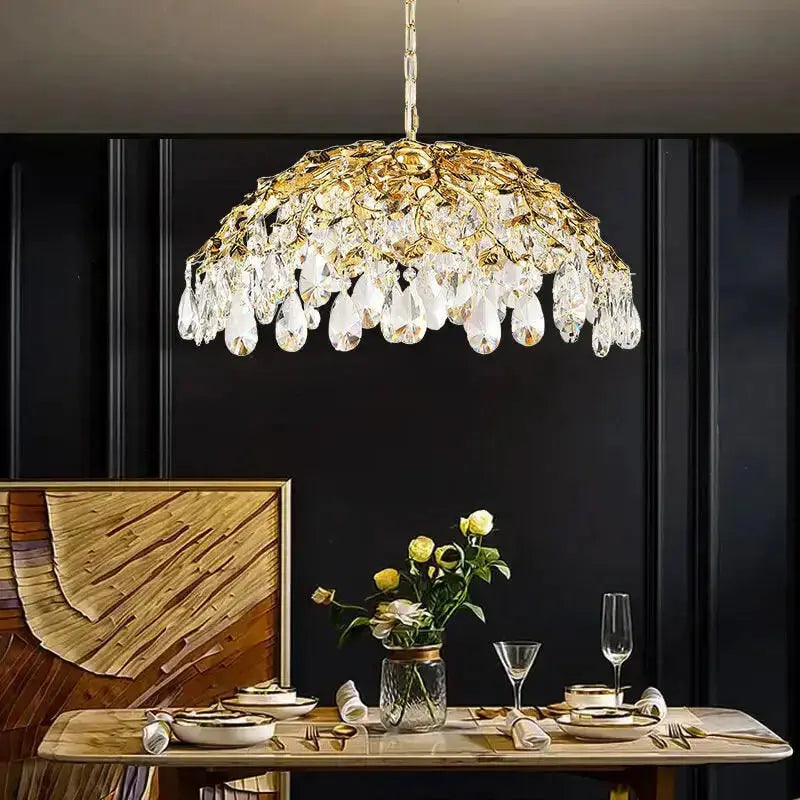
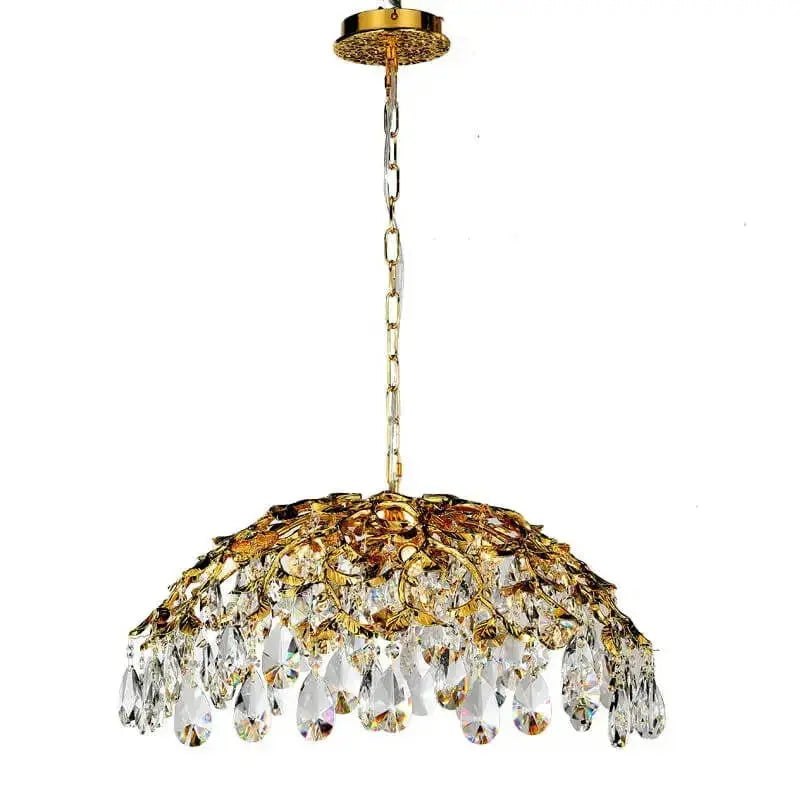
In a foyer, a semi-flush crystal fixture offers a welcoming hint of chandelier glamour without imposing on the space. Over a dining table, it can provide decorative interest when a pendant would hang too low. In a bedroom, a floral, lantern-inspired or contemporary metal semi-flush design adds a finished, boutique-hotel quality above the centre of the room.
The upward illumination produced by many semi-flush designs is another advantage. Light that reaches the ceiling and reflects back into the room can make the overall effect feel warmer and more generous. This is valuable in spaces finished in deeper paint colours, richly grained timber or textured wallcoverings, where a single downward-facing source may create unwanted shadows.
A semi-flush fixture also offers more opportunity to showcase premium materials. Clear crystal catches the light with lively brilliance, opal glass diffuses it into a soft glow, and sculptural metalwork brings warmth and definition even when the lamp is switched off.
Consider the room’s design language
The best choice is not always about ceiling height. It is also about what the room asks the lighting to do visually.
Choose a flush mount when the interior already has strong elements competing for attention: dramatic wallpaper, ceiling beams, artwork or an elaborate staircase, for example. Its restrained profile lets those details breathe. It is equally suited to contemporary rooms where clean lines and clear sightlines are central to the look.
Choose a semi-flush mount when the room feels finished at eye level but empty above. This frequently happens in bedrooms furnished with a statement bed, in dining rooms with elegant cabinetry, and in entryways that need a moment of arrival. The fixture provides that final vertical layer, making the space feel more composed.
For traditional and transitional homes, lantern shapes, crystal details and aged brass finishes bring timeless elegance. In more modern settings, seek simplified forms: globe clusters, slim discs, ribbed glass or linear metal frames. The fixture should relate to the room’s existing curves, finishes and level of ornament, rather than introducing an unrelated style.
Light quality matters as much as the silhouette
A beautiful ceiling fixture still needs to serve the room. Flush mounts with enclosed shades tend to produce even, diffused ambient light, making them excellent for practical spaces and smaller rooms. Designs with opaque metal shades may be more directional, so they often benefit from additional lighting elsewhere.
Semi-flush fittings vary more widely. Open-frame and crystal styles scatter light beautifully but may create patterned reflections on nearby walls and ceilings. Glass-shaded designs soften the glare of visible bulbs, while upward-facing bowls help brighten the ceiling plane. Consider the effect you want after dark, not only the fixture’s appearance in daylight.
Bulb temperature shapes the mood. Warm white light, around 2700K, flatters bedrooms, lounges and dining rooms, especially alongside brass, timber and soft textiles. Kitchens, bathrooms and task-oriented areas may suit a slightly crisper white light. Where possible, choose dimmable bulbs and a compatible dimmer, allowing one refined fixture to adapt from everyday brightness to a more intimate evening atmosphere.
Do not expect a central ceiling light to do every job. A living room feels more luxurious with table lamps, floor lamps or wall lights creating pools of light at different heights. In a kitchen, under-cabinet lighting can support preparation tasks while the ceiling fitting provides overall illumination.
A practical way to make the final decision
Before choosing, measure the ceiling height, the room width and the fixture’s projected drop. Then stand beneath the proposed location and consider how the fitting will be viewed from the doorway, seating area and main circulation path.
If clear headroom, simplicity and broad ambient light are the priorities, a flush mount will likely feel right. If your room has enough vertical space and calls for a more decorative ceiling moment, a semi-flush mount offers greater dimension without the lower drop of a pendant or chandelier.
For homes that favour elevated details, neither option needs to be an afterthought. The right close-to-ceiling fixture can make a compact hallway feel intentional, a bedroom feel more serene and a dining room feel quietly luxurious. Choose the piece that respects the proportions of the room, then let its material, finish and glow bring the ceiling into the design story.