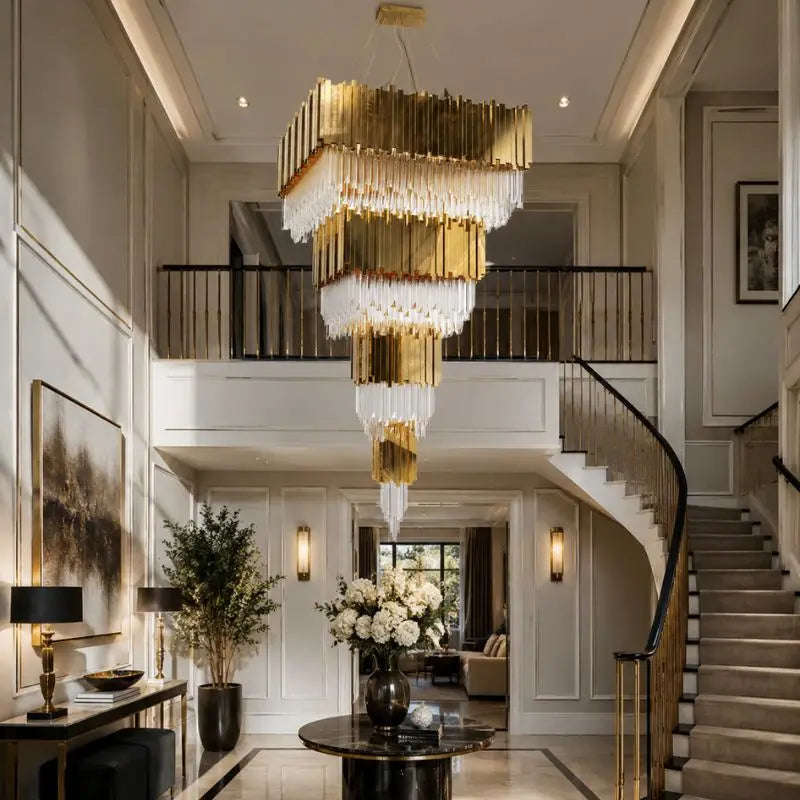
A staircase is one of the few places in a home where lighting is viewed in motion: from the hall below, the landing above and every step in between. To illuminate staircase chandeliers successfully, treat the fixture as more than a source of brightness. It should bring proportion, atmosphere and a memorable sense of arrival, while still making the route through your home feel comfortable after dark.
A well-chosen stairwell chandelier turns unused vertical space into a design feature. Whether your interior calls for glittering crystal, sculptural glass or a streamlined contemporary silhouette, the right piece can make even a modest hallway feel considered and quietly luxurious.
Why staircases deserve statement lighting
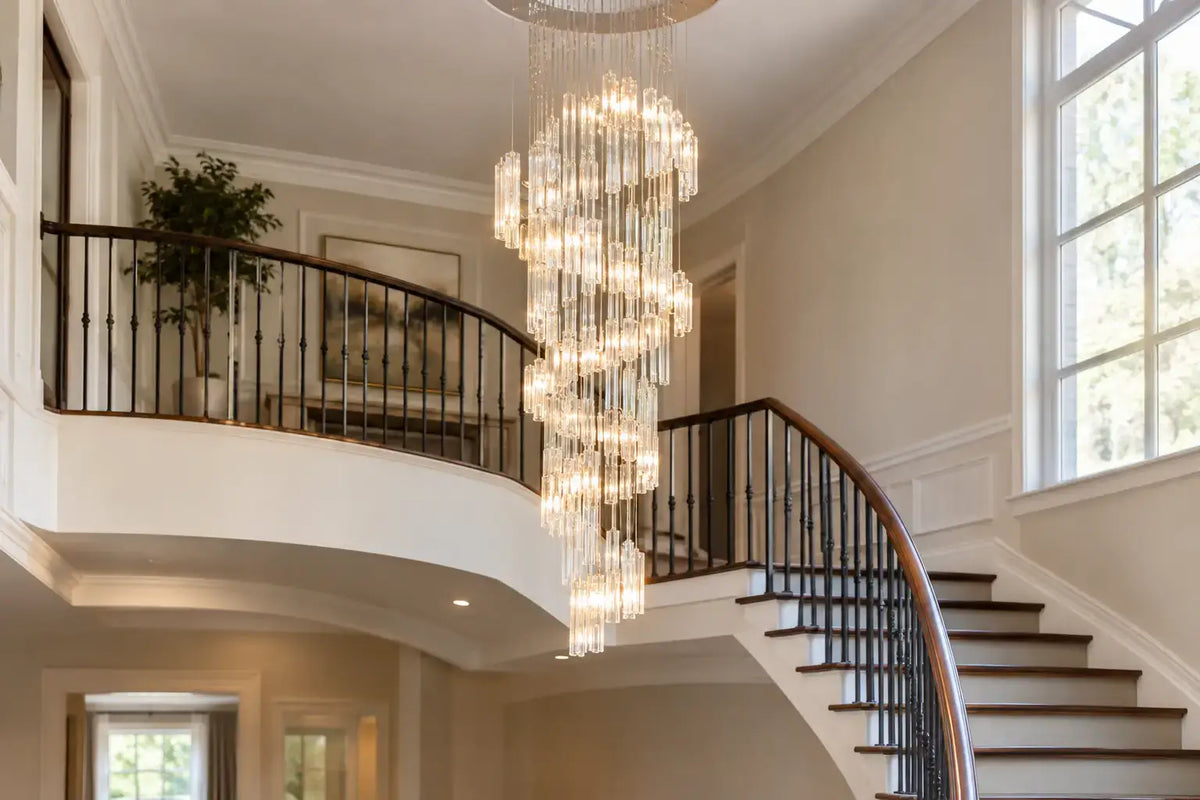
Unlike a dining table or kitchen island, a staircase has height built into it. A chandelier can occupy that volume beautifully, drawing the eye upwards and connecting the floors of your home. In a double-height foyer, it establishes the first impression. Along a winding staircase, it follows the architecture and creates a gentle rhythm as you move through the house.
There is a practical benefit too. Staircases need clear, even illumination to make every tread and change of direction easy to see. A decorative fixture should not be expected to do all the work alone, particularly in a long or shadowed stairwell, but it provides the warm central glow that makes the area feel welcoming rather than merely functional.
The most successful scheme balances spectacle with restraint. A grand cascade of crystal can look exquisite beside a sweeping staircase with ornate balustrades, while a minimal linear or globe design may give a contemporary home the stronger result. The aim is not to fill every inch of open space. It is to choose a form that gives the architecture a focal point.
How to size illuminate staircase chandeliers
Scale is where a beautiful chandelier either becomes transformative or feels awkwardly undersized. Start by considering the fixture from the viewpoints that matter: the entry hall, the bottom of the stairs, the landing and any upper-floor gallery. It should look intentional from each position, not disappear when seen from below.
For a stairwell that is open to a foyer, add the room's length and width in feet, then use that number in inches as a useful starting point for chandelier diameter. A hall measuring 12 feet by 14 feet, for example, may suit a fixture around 26 inches wide. This is guidance rather than a strict rule. A visually airy multi-drop design can be larger than a dense metal-and-crystal form without overwhelming the space.
Height deserves equal attention. In a double-height entrance, the lowest point of the chandelier should generally sit at least seven feet above the floor where people pass beneath it. Above a staircase, the fixture can often hang lower through the central void, provided there is generous clearance from the steps and landing. Ask your electrician to assess the exact sightlines and headroom before installation, especially with spiral, curved or split-level staircases.
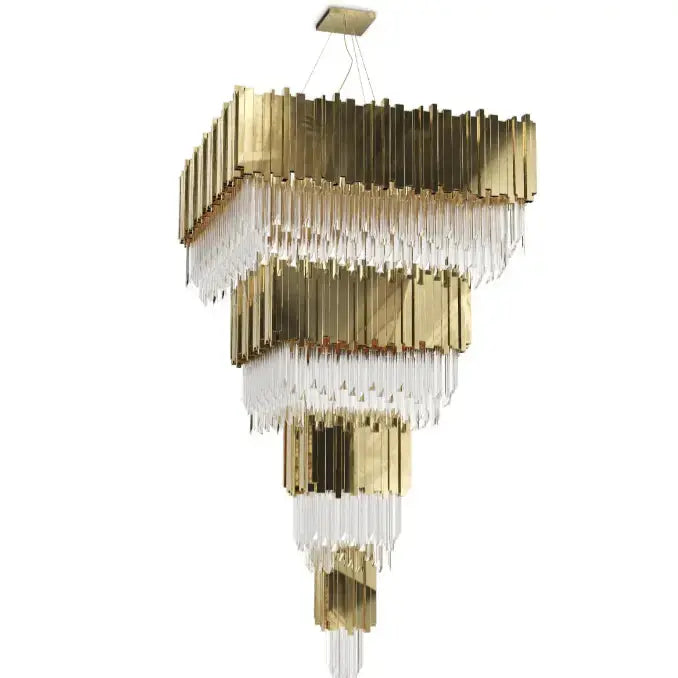
A multi-tier chandelier or descending pendant composition is particularly effective where the ceiling is high. It uses the vertical drop instead of leaving a large empty gap overhead. For standard ceiling heights, a semi-flush ceiling light, compact lantern or short-drop chandelier may offer the same elevated finish without crowding the room.
Choose a style that follows the architecture
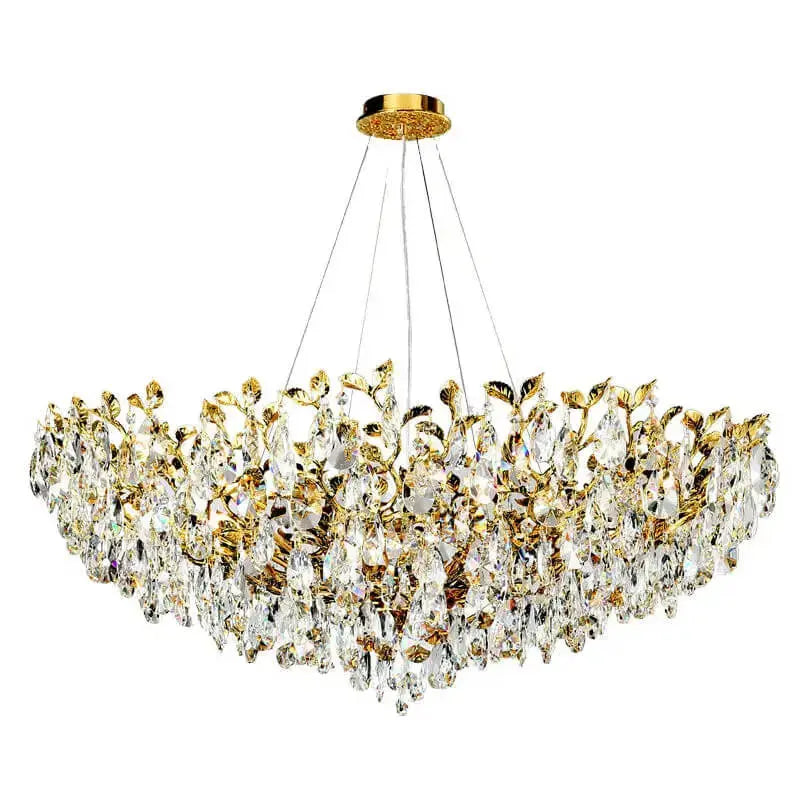
Crystal staircase chandeliers remain a natural choice for homes with classic detailing. Their faceted surfaces catch light from many angles, creating delicate reflections on walls and ceilings. A traditional candelabra profile suits panelled halls, period properties and graceful curved stairs, while a more geometric crystal design brings polish to transitional interiors.
For a modern luxury look, consider alabaster, smoked glass, frosted globes or clean metalwork in brass, black or chrome. An alabaster chandelier produces a softer, more diffused glow than clear crystal and can feel wonderfully calm in a minimalist entrance. Slim rods, clustered spheres and floating ring forms work especially well alongside glass balustrades, pale timber and architectural plaster finishes.
Material should relate to the nearby finishes rather than match every detail precisely. Warm brass can echo a stair rail, aged bronze can ground a richly painted hall, and clear glass can prevent a visually busy scheme from becoming too heavy. If your staircase has elaborate ironwork or patterned flooring, a simpler chandelier may give the room needed breathing space.
Plan the light, not just the fixture
A chandelier's beauty is best appreciated when its light is layered. Depending on the layout, discreet wall lights, landing lights or recessed ceiling fittings can support it by reducing deep shadows near turns and thresholds. This is particularly valuable in homes where the staircase is used frequently by children, guests or anyone moving around late at night.
Choose dimmable lamps and a compatible dimmer whenever possible. At full brightness, the chandelier can welcome visitors and bring clarity to the hallway. Lowered in the evening, it becomes an atmospheric feature that softens the transition between public and private spaces. Warm white light is usually the most flattering choice for residential interiors: it enhances brass, timber, stone and skin tones without making the hall feel stark.
Clear glass and crystal fittings reward careful lamp selection. Exposed filament-style LED bulbs can complement a lantern or candelabra chandelier, but only if the bulb shape suits the fixture and the brightness is controlled. In a modern glass globe design, frosted bulbs often reduce glare and give a more refined finish. If the chandelier includes integrated LEDs, look for a warm colour temperature and a high-quality diffuser rather than focusing on wattage alone.
Installation details that protect the finished look
A stairwell fitting is rarely a simple ceiling-light swap. High ceilings, difficult access and substantial fixtures often require professional installation. The ceiling box and mounting point must be rated to carry the chandelier's weight, and a qualified electrician can ensure the wiring, dimmer and controls are suitable.
Before ordering, record the ceiling height, stair width, landing dimensions and the available drop from ceiling to the preferred lowest point. Also check whether a lift, ladder or scaffolding may be needed. These practical details help prevent a delay at the moment your new centrepiece is ready to be installed.
Maintenance should influence the final choice as well. Crystal delivers exceptional sparkle, but it needs occasional cleaning to retain its brilliance. A closed glass or alabaster shade is often easier to maintain in a busy family hallway. For very tall spaces, consider how lamps will be changed and whether a motorised lift system is worthwhile for a large, intricate chandelier.
Make the staircase feel like part of the home
A staircase chandelier should relate to the rooms beyond the hall. Repeat a metal finish in a nearby pendant, wall light or mirror frame to make the home feel composed. You do not need identical fixtures throughout. A shared tone, material or silhouette is enough to create continuity from the entrance to the living spaces.
At ChandeliersLife, statement staircase lighting is selected to bring this level of design confidence to the home, from timeless crystal silhouettes to contemporary sculptural forms. Choosing online is easier when you begin with your measurements, ceiling height and the mood you want guests to feel as they enter.
Give the stairwell the same consideration as the rooms you decorate most carefully. The right chandelier will not simply brighten the route upstairs; it will make every arrival, descent and upward glance feel more considered.